Flood is excluded from every standard homeowners and renters policy in the United States. Not limited, not capped — excluded entirely, including storm surge, rising water, and rain that overwhelms drainage.
It is also the most common and most costly natural disaster in the country, and a large share of claims come from properties nobody considered at risk.
What counts as a flood

The definition matters, because the same water can be covered or excluded depending on where it came from.
A flood is broadly defined as a temporary condition of partial or complete inundation of normally dry land, affecting two or more acres or two or more properties. In plain terms: water that arrives from outside and comes up from the ground.
Contrast that with water your homeowners policy generally does cover: a burst pipe, an overflowing washing machine, a leaking water heater, rain entering through a roof that wind has damaged. Water falling from above through a hole the storm made is usually a homeowners claim. The same storm’s water rising from the street into your basement is a flood claim.
Two further distinctions catch people. Sewer and drain backup is neither — it is excluded from standard homeowners policies and is not a flood, and it needs its own inexpensive endorsement. And groundwater seepage through a foundation without a general flooding event is typically excluded by both policies.
Where coverage comes from
Two markets exist.
The National Flood Insurance Program, administered by FEMA and sold through ordinary insurance agents. Policies are standardised, availability does not depend on the insurer’s appetite, and your community must participate in the programme — most do.
Private flood insurance, which has grown substantially and now offers a genuine alternative. Private policies frequently provide higher limits, may cover things NFIP does not — additional living expenses while you are displaced, for instance — and in some cases price better for lower-risk properties.
Private coverage generally satisfies a lender’s requirement, but confirm this before switching. And be aware that leaving the NFIP for a private policy and later returning can affect certain rating benefits, so ask before moving.
The waiting period

NFIP policies normally take effect 30 days after purchase. Buying as a storm approaches does not work, and this is the single most consequential rule in the subject.
Limited exceptions exist — chiefly where coverage is purchased in connection with a loan closing, and in certain situations following a map revision. Neither helps someone watching a forecast.
The practical consequence: flood insurance is bought in calm weather or not at all. If you have been meaning to look into it, the time is now rather than in the season.
What NFIP covers, and the limits
NFIP residential policies cover the building and its contents as two separate purchases, each with its own limit and its own deductible. Buying building coverage alone — which is all a lender requires — leaves everything inside uninsured.
| Coverage | NFIP residential maximum |
|---|---|
| Building | $250,000 |
| Contents | $100,000 |
| Renters (contents only) | $100,000 |
Homes worth more than the building cap need excess flood coverage from a private insurer to close the gap. This is routine and worth arranging rather than accepting the shortfall.
Two valuation points that surprise claimants. Building coverage on a primary residence insured to at least 80 percent of replacement cost is generally paid on a replacement cost basis. Contents are paid at actual cash value — depreciated — even when your homeowners policy uses replacement cost. And there is no coverage for additional living expenses under a standard NFIP policy, so a hotel while your home is repaired is your cost unless you bought private coverage that includes it.
Basements, and the rule nobody expects
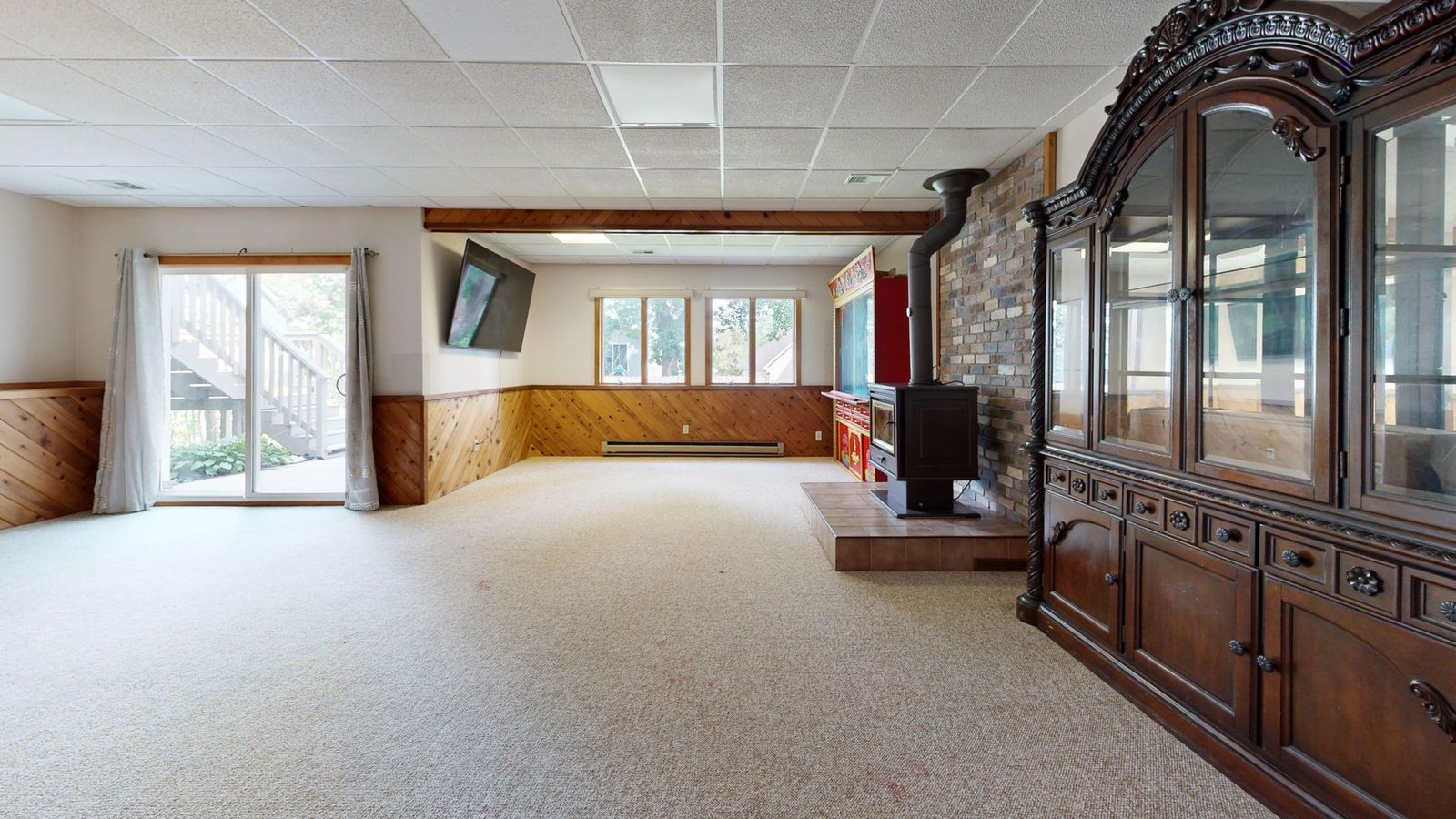
NFIP coverage in basements and other areas below the lowest elevated floor is severely restricted, and this catches more people than any other exclusion.
Building items are limited to essential structural and service equipment — the furnace, water heater, electrical panel, sump pump, foundation elements, stairways. Contents coverage in a basement is limited to a short list, principally appliances such as washers, dryers and freezers.
A finished basement is largely uninsured. Carpeting, drywall, furniture, a home office, a television, personal belongings stored down there — generally not covered. If your basement is finished and your area floods, this is worth knowing before you claim rather than after.
Flood zones, and why they mislead

FEMA maps assign every property a flood zone. Zones beginning with A or V are high-risk Special Flood Hazard Areas, where a federally backed mortgage requires flood insurance. Zones B, C and X are moderate or minimal risk, where it is optional.
Three things make those labels less reassuring than they look.
A substantial share of NFIP claims come from outside high-risk zones. Moderate and low-risk does not mean no risk, and it is precisely in those areas that homeowners decline coverage.
Maps lag reality. Development upstream, new paving, changed drainage and shifting weather patterns all alter flood behaviour faster than maps are revised.
Pricing no longer follows the zone alone. Under FEMA’s Risk Rating 2.0 methodology, NFIP premiums are based on property-specific characteristics — distance to water, elevation, foundation type, replacement cost — rather than simply which zone you sit in. The practical effect is that two neighbours in the same zone can pay very different premiums, and that a low-risk property in a high-risk zone may be cheaper to insure than it once was.
Your address can be checked on FEMA’s Flood Map Service Center, and your local floodplain administrator can explain what the map says about your specific parcel.
What one foot of water actually costs
Flood damage escalates faster than most people picture, because water destroys materials rather than merely wetting them. Once drywall, insulation and subfloor are saturated, they are removed and replaced rather than dried.
A hypothetical 2,000 square foot single-storey home takes roughly a foot of water. The work that follows is not optional.
| Item | Illustrative cost |
|---|---|
| Water extraction, drying and sanitising | $4,000 |
| Remove and replace drywall and insulation to four feet | $11,000 |
| Flooring throughout | $14,000 |
| Kitchen cabinets and lower joinery | $18,000 |
| HVAC, water heater and electrical at low level | $9,000 |
| Contents — furniture, appliances, belongings | $25,000 |
| Total | $81,000 |
These figures are illustrative rather than a quote, and regional labour costs move them considerably. The proportions are what matter: roughly two thirds of the loss is building work and one third is contents — which is precisely why buying building coverage alone, because that is all the lender demanded, leaves a very large hole.
Note also what is missing from the table. There is no line for somewhere to live during three months of repairs, because a standard NFIP policy does not pay additional living expenses. A family displaced by that loss covers the hotel or rental themselves unless they bought private coverage that includes it — which is one of the strongest arguments for quoting the private market alongside NFIP.
And because contents are settled at actual cash value under NFIP, the $25,000 of belongings is paid at depreciated value rather than what replacing them costs.
When your lender requires it
A federally regulated lender must require flood insurance on a property in a high-risk zone, for at least the loan balance or the NFIP maximum, whichever is less.
Two consequences follow. That requirement protects the lender, not you — it covers the building up to the loan balance and nothing of your possessions, so contents coverage remains your decision. And if you let the policy lapse, the lender can force-place coverage, which is typically far more expensive and protects only their interest.
If a map revision moves your property into a high-risk zone, the requirement can appear mid-mortgage. Newly mapped properties may qualify for favourable initial rating, so ask rather than simply accepting the first quote.
What it costs and how to lower it
Premiums vary enormously with elevation, foundation type, distance to water and coverage chosen, so published averages are of limited use for an individual property. Several levers genuinely reduce the figure.
- An elevation certificate. Not required under Risk Rating 2.0, but it can still support a lower rate where your property sits higher than the model assumes. Obtaining one costs a few hundred dollars and can pay for itself repeatedly.
- Raising the deductible, separately for building and contents.
- Mitigation — elevating utilities and machinery, installing flood vents in enclosures, and in some cases elevating the structure itself. Grants are sometimes available through state and local hazard mitigation programmes.
- Community Rating System discounts. Communities that exceed minimum floodplain management standards earn premium discounts for every policyholder in the area, and the discount can be substantial. Ask your floodplain administrator whether your community participates and at what class.
Quote both NFIP and private options. Because the two markets price differently, the cheaper one varies property by property — and the comparison discipline is the same as in any other line, as described in our guide to comparing insurance quotes.
Where you live changes the problem
Flood risk is the most geographically concentrated exposure in personal insurance, and a few state-level patterns are worth knowing.
Gulf and Atlantic coastal states carry the largest share of NFIP policies, and storm surge is the dominant cause. Coastal properties in V zones — subject to wave action as well as rising water — face both the strictest building requirements and the highest premiums. Elevation does more to reduce cost here than anywhere else.
Inland river states face a different pattern: slower-onset flooding along river systems, often with more warning but affecting large areas at once. Properties well away from any coast routinely flood, and take-up rates in these areas are typically far lower than the risk warrants.
Wildfire states carry a risk most homeowners never connect to flooding. Burn scars lose the vegetation that absorbs rainfall, and the ground itself can become water-repellent, so areas downhill from a recent fire face sharply elevated flood and debris-flow risk for several years afterwards. California in particular sees this cycle repeatedly. If a fire has burned near you, flood coverage becomes relevant even if it never was before — and the 30-day wait applies just the same.
Urban areas everywhere face flash flooding from drainage that cannot absorb intense rainfall, which is why flood claims appear regularly in cities far from any river or coast.
Two practical steps follow. Your state department of insurance and your community floodplain administrator both publish local guidance, and the second can tell you whether your community participates in the Community Rating System and at what discount level. And if you are buying a property, ask directly whether it has flooded before — several states require sellers to disclose prior flood damage, though the requirements vary considerably and a few states require nothing at all.
Renters and condo owners
Tenants can buy NFIP contents coverage up to $100,000 without owning anything, and it is inexpensive. A renters policy excludes flood exactly as a homeowners policy does, as covered in our guide to whether renters insurance is worth it.
Condo owners sit in a more complicated position. The association’s master policy may carry flood coverage on the building, and the unit owner buys contents coverage plus whatever interior elements the master policy does not address. Read the association’s documents to find where the line sits — it differs between buildings.
Filing a flood claim
- Report the loss immediately to your insurer or agent.
- Photograph and video everything before removing anything, including standing water lines on walls.
- Separate damaged property rather than discarding it, and keep samples of flooring and materials where possible.
- Start drying out to prevent mould, which can otherwise be treated as a separate, excluded cause of damage.
- Keep every receipt for repairs, cleaning and temporary measures.
- Complete a proof of loss within the deadline your policy states. NFIP deadlines are strict and extensions are not guaranteed.
If a claim is denied or underpaid, NFIP has a formal appeals process through FEMA. Private policies follow your state’s complaint and appeal procedures through the department of insurance.
Mistakes that cost the most
- Assuming homeowners insurance covers flood.
- Waiting for a forecast and running into the 30-day wait.
- Buying building coverage only because that is all the lender required.
- Assuming a low-risk zone means no risk.
- Finishing a basement without understanding it is largely uninsurable against flood.
- Insuring to the loan balance rather than to rebuild cost.
- Never quoting private coverage alongside NFIP.
- Overlooking sewer backup, which is a separate and inexpensive endorsement on the homeowners policy.
Frequently asked questions
Do I need it if I am not in a flood zone?
Every property is in some flood zone; the question is which. Coverage in moderate and low-risk zones is optional and comparatively inexpensive, and a meaningful share of claims come from exactly those areas. For most homeowners outside high-risk zones it is a small premium against a loss that would otherwise be uninsured entirely.
Does it cover mould?
Mould resulting directly from the flood may be covered if you took reasonable steps to mitigate it. Mould that developed because the property was left wet when action was possible generally is not. Begin drying out as soon as it is safe.
What about my car?
Flood damage to a vehicle is covered by the comprehensive portion of an auto policy, not by flood insurance. If you carry liability only, a flooded car is uninsured.
Can I be dropped after a claim?
NFIP policies are renewable regardless of claim history, which is one of the programme’s genuine advantages. Properties with repeated severe losses may face requirements to mitigate or elevate, and private insurers may decline to renew.
Is federal disaster assistance an alternative?
No. It requires a presidential disaster declaration, typically arrives as a modest grant or a loan that must be repaid, and averages far below the cost of restoring a flooded home. It is emergency relief, not insurance.
The short version
Check your address on FEMA’s map service, then quote both NFIP and private coverage. Buy contents coverage as well as building coverage, understand what your basement is and is not covered for, and arrange excess coverage if your home is worth more than $250,000 to rebuild.
And do it in calm weather. The thirty-day wait is the rule that turns an intention into an uninsured loss.
This article is general information for U.S. consumers and is not insurance or legal advice. NFIP rules, coverage limits, rating methodology and private market options change; information cited reflects published programme rules as of 2026. Confirm details with FEMA, a licensed agent, or your community floodplain administrator.