Most homeowners could not tell you what their policy covers. That is not carelessness — it is a reasonable response to a forty-page contract written in a dialect of English that exists nowhere else. The document arrives at closing, goes into a drawer, and gets read for the first time on the worst day of the year. In the USA, these numbers swing noticeably by state — rates, premiums and tax rules all follow state lines, so treat national averages as a starting point rather than a quote.
The useful thing to know is that a standard homeowners policy is not one coverage. It is six, each with its own limit, plus a list of things it explicitly will not pay for. Once you can see that structure, the contract becomes readable, and the gaps become obvious before they matter.
The six parts of a standard policy

Nearly every U.S. homeowners policy is organized into the same lettered sections. Your declarations page lists each one with a dollar limit next to it.
| Coverage | What it pays for | Typical limit |
|---|---|---|
| A — Dwelling | The house itself: structure, roof, built-in systems | Set by rebuild cost |
| B — Other structures | Detached garage, fence, shed, driveway | Often 10% of Coverage A |
| C — Personal property | Your belongings, wherever they are | Often 50–70% of Coverage A |
| D — Loss of use | Hotel, meals and rent while the home is uninhabitable | Often 20–30% of Coverage A |
| E — Personal liability | Injury or property damage you are legally responsible for | $100,000–$500,000 |
| F — Medical payments | Minor injuries to guests, regardless of fault | $1,000–$5,000 |
Two of these deserve more attention than they usually get.
Coverage E is not about your house at all. It follows you. If your dog bites someone at a park, or your child damages a neighbor’s property, or a guest is injured on your stairs and sues, this is the coverage that responds — including legal defense costs. The default limit on many policies is $100,000, which has not been a serious number for a long time. Raising it to $300,000 or $500,000 typically costs very little, and an umbrella policy sitting above it costs less than most people assume.
Coverage D is the one people forget exists. After a serious fire, the question is not only how the house gets rebuilt but where the family lives for the eight to eighteen months it takes. Loss of use pays the difference between your normal living costs and the higher costs you incur while displaced.
The single most expensive line on your policy
Somewhere on the declarations page, your personal property coverage is labeled either replacement cost or actual cash value. That one word changes the payout more than almost anything else in the contract.
Replacement cost pays what it costs to buy a comparable new item today. Actual cash value pays that amount minus depreciation for age and wear.
A seven-year-old sofa that cost $1,800 might be replaced today for $2,200. Under replacement cost, you eventually receive something close to $2,200. Under actual cash value, the insurer depreciates it heavily and might pay $500. Multiply that across an entire household’s contents and the difference runs into tens of thousands of dollars.
Replacement cost coverage costs meaningfully more in premium and is, for most households, the better purchase. One procedural detail matters: replacement cost claims are usually paid in two stages. The insurer first pays actual cash value, then releases the remaining “recoverable depreciation” after you actually replace the item and submit receipts. If you never replace it, you never receive the second payment.
“Covered perils” and why the policy form matters
Policies come in standardized forms, and the most common for a single-family home is the HO-3. It works differently for your structure than for your belongings, which trips people up.
- The structure (Coverage A and B) is written on an open-perils basis. Everything is covered unless the policy specifically excludes it. The exclusion list is therefore the document that matters.
- Your belongings (Coverage C) are written on a named-perils basis. Only the listed causes are covered — fire, lightning, windstorm, hail, theft, vandalism, falling objects, water damage from plumbing, and a handful of others. If the cause is not on the list, there is no coverage.
An HO-5 form upgrades belongings to open perils as well, which closes that asymmetry. It costs more and is not offered by every carrier on every home, but it is worth asking about. Renters use an HO-4 and condo owners an HO-6, which covers interior finishes and belongings while the building association’s master policy handles the structure.
What a standard policy does not cover
This is where most unpleasant surprises live. The exclusions below are standard across the industry, not unusual fine print from a bad insurer.
- Flood. Excluded entirely, including storm surge, rising water and heavy rain that overwhelms drainage.
- Earth movement. Earthquakes, landslides, sinkholes and mudflow, including foundation cracking caused by tremors.
- Sewer and drain backup. Excluded unless you add an endorsement, which is usually inexpensive and worth having.
- Maintenance and wear. A roof that has simply aged out, rot, rust, settling, deterioration. Insurance covers sudden and accidental events, not the passage of time.
- Mold. Usually excluded or capped at a small amount, unless it results directly from a covered water loss.
- Pests. Termites, rodents and insect damage.
- Intentional acts, and in most policies, damage from illegal activity.
- Business activity on the premises beyond a very small sub-limit for business property.
- Vehicles and aircraft, which belong on their own policies.
- Vacancy. Most policies restrict or void coverage once a home has been unoccupied beyond a stated period, commonly 30 or 60 days.
Almost every item on that list can be addressed — by an endorsement, a separate policy, or a different form. But none of them is handled automatically, and discovering the gap during a claim is the expensive way to learn it exists.
Flood: the exclusion that catches the most people
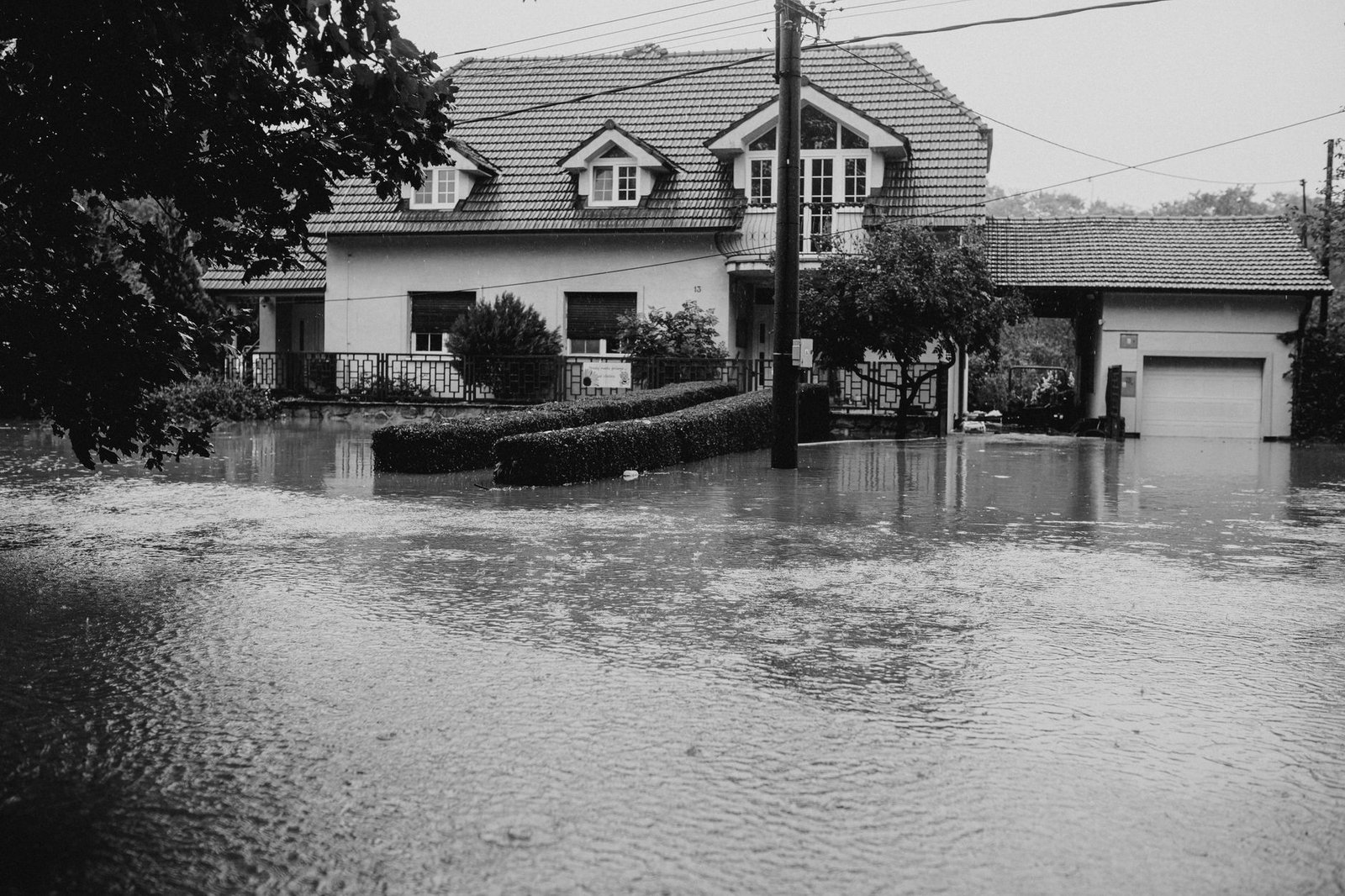
Flood is excluded from every standard homeowners policy in the United States. Coverage comes separately, either through the National Flood Insurance Program administered by FEMA, or from a growing private flood market.
Four things to know:
- There is normally a 30-day waiting period before an NFIP policy takes effect. Buying as a storm approaches does not work. Limited exceptions exist, such as policies purchased in connection with a loan closing.
- NFIP coverage is capped. Residential building and contents coverage each have statutory limits, and homes worth more than the building cap need excess flood coverage from a private insurer.
- Contents coverage is separate and often paid on an actual cash value basis, even when your homeowners policy uses replacement cost.
- Being outside a high-risk flood zone does not mean you are safe. A substantial share of NFIP claims come from properties outside designated high-risk areas, where coverage is also much cheaper.
FEMA’s flood map service lets you check your property’s designated zone, and your mortgage lender will require flood coverage if you are in a high-risk zone. Not requiring it is not the same as not needing it.
Earthquake, and why it is a separate conversation
Earth movement is excluded everywhere, and earthquake coverage is bought as an endorsement or a standalone policy.
The structure differs from ordinary insurance in one important way: earthquake deductibles are usually expressed as a percentage of the dwelling limit rather than a flat dollar amount, commonly in the range of 5 to 25 percent. On a home insured for $400,000, a 10 percent deductible means the first $40,000 of damage is yours. That does not make the coverage pointless — it is catastrophe protection, not maintenance protection — but it does change how you should think about it.
California operates a dedicated mechanism, the California Earthquake Authority, through which most residential earthquake policies in the state are written. Insurers licensed to sell homeowners insurance in California are required to offer earthquake coverage, which is why California homeowners receive an offer whether or not they want one.
The deductible that is not the deductible
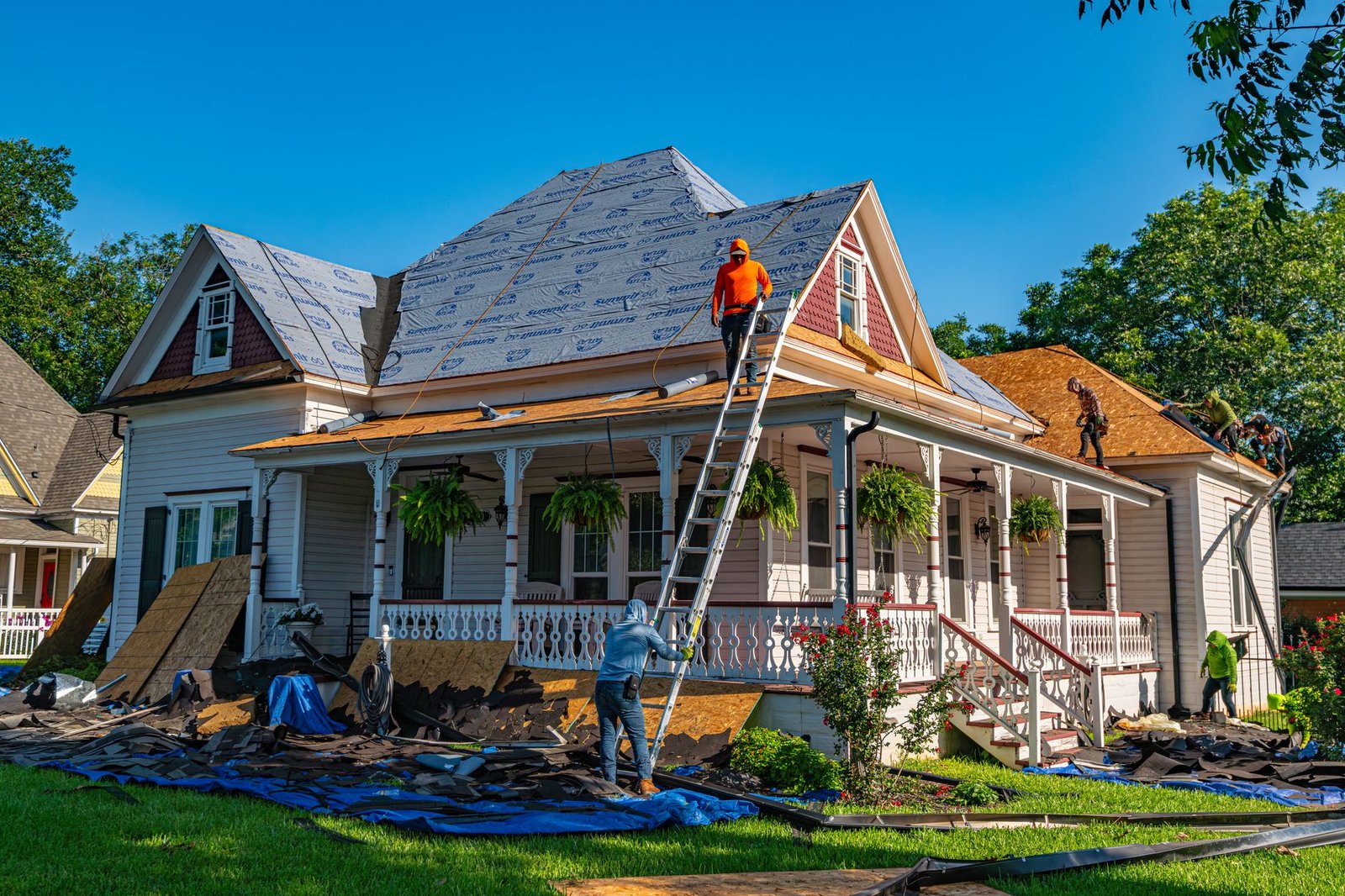
Your declarations page shows a deductible — say $1,000. In much of the country, that number does not apply to the claims most likely to happen.
Hurricane and named-storm deductibles are separate, usually percentage-based, and apply in coastal states when a named storm causes the damage. A 2 percent hurricane deductible on a $400,000 dwelling limit is $8,000, not $1,000. Trigger conditions vary by state — some tie to a named storm, others to hurricane-force winds recorded locally.
Wind and hail deductibles work the same way across much of the Midwest and Plains, where hail is the dominant claim type.
Roof settlement schedules are the newest and least understood change. A growing number of carriers now pay older roofs on an actual cash value basis regardless of how the rest of the policy is written, or apply a depreciation schedule tied to roof age. A twenty-year-old roof destroyed by hail may be paid at a fraction of replacement cost. Check your policy for a roof surfacing endorsement.
Sub-limits: covered, but not for as much as you think
Personal property coverage has internal caps on specific categories. These are not exclusions — the items are covered — but the limit is far below the overall Coverage C amount.
Typical categories with sub-limits include jewelry and watches, cash, firearms, silverware, collectibles, and business property kept at home. Jewelry theft in particular is often capped at an amount that would not replace a single engagement ring, even on a policy with $250,000 of contents coverage.
The fix is a scheduled personal property endorsement, sometimes called a rider or floater. You list specific items with appraised values, and they are covered for those amounts — usually with no deductible and on an open-perils basis, meaning a ring lost down a drain is covered rather than only stolen ones.
What it costs, and why your state matters so much
Published 2026 averages cluster around $2,490 to $2,872 a year nationally, depending on the dwelling limit and deductible assumed by the source. Insurance.com’s 2026 figure of $2,872 assumes $300,000 of dwelling coverage with a $1,000 deductible.
We break the pricing down further — including the states with the steepest 2026 increases and the levers that genuinely reduce a premium — in how much home insurance costs on average. USA lenders and insurers price by region, so two identical-looking situations in different states can cost meaningfully different amounts.
Auto premiums follow the same geography for much the same reasons, which is why a household moving between states often sees both policies reprice at once. We set out the drivers in how car insurance rates vary by state.
The national number conceals enormous variation. Florida averages around $9,449 a year — roughly three to four times the national figure — driven by hurricane exposure, reinsurance costs and litigation patterns. States with low catastrophe exposure sit far below the average.
Availability, not just price, has become a live issue in several states. In areas facing concentrated wildfire or hurricane risk, some carriers have stopped writing new business or declined to renew existing policies. Where the private market withdraws, states operate insurers of last resort — California’s FAIR Plan, Florida’s Citizens Property Insurance, and wind pools along the Gulf and Atlantic coasts. These provide coverage that is typically narrower and more expensive than a standard policy, and they are a backstop rather than a preference.
The rating factors behind a home premium follow the same filed-multiplier logic described in our explanation of how car insurance rates are calculated: location and local claim experience carry the most weight, followed by the age and construction of the home, roof age and material, distance to a fire station and hydrant, claims history on the property, and coverage choices.
Setting Coverage A correctly
The most common sizing error is anchoring the dwelling limit to what you paid for the house or what it would sell for today. Neither is the right number.
If you are buying rather than reviewing, price coverage before you commit to a property rather than after. Premiums vary enormously by state and by construction, and they sit inside your monthly payment through escrow — our guide to first-time home buyer loan options covers the other costs that arrive alongside the down payment.
Coverage A should reflect the cost to rebuild the structure on its existing lot — materials, labor, permits, debris removal. That figure excludes land value, which is why a home may sell for $600,000 in an expensive market while costing $350,000 to rebuild, and why a home in a low-cost market can cost more to rebuild than it would fetch.
Two endorsements guard against the estimate being wrong:
- Extended replacement cost pays a defined percentage above your dwelling limit — often 25 or 50 percent — if rebuild costs exceed it. This matters after a widespread disaster, when local construction demand spikes and labour and materials cost far more than normal.
- Ordinance or law coverage pays the additional cost of rebuilding to current building codes. An older home damaged badly enough to require a permit often cannot legally be rebuilt the way it was, and the upgrade cost is not covered without this endorsement.
Ask your insurer to re-run the replacement cost estimate every few years, and after any renovation. Construction costs have moved sharply in recent years, and a dwelling limit set five years ago may no longer rebuild the house.
Mistakes that surface at claim time
- No home inventory. After a total loss you will be asked to itemize everything you owned, from memory, while displaced. Photograph or video every room now and store it in the cloud, not in the house.
- Filing small claims. Claims history follows the property through the C.L.U.E. database for several years and affects both price and eligibility. A claim slightly above your deductible can cost more in future premium than it pays.
- Assuming home improvements are automatically covered. Tell your insurer about a finished basement, a new kitchen or an addition. Unreported improvements are uninsured improvements.
- Ignoring a non-renewal notice. If your carrier declines to renew, start shopping immediately. A gap in coverage on a mortgaged property allows the lender to force-place insurance, which is far more expensive and protects the lender rather than you.
- Carrying the default liability limit. $100,000 of personal liability is thin protection for a household with any assets at all.
It is also worth reviewing home and auto together. Multi-policy discounts are usually the largest single discount available in either line, and the same comparison discipline described in our guide to finding the cheapest car insurance quotes online — one written specification, quoted identically everywhere — works just as well for property coverage.
Frequently asked questions
Does my policy cover a burst pipe?
Generally yes — sudden and accidental discharge of water from a plumbing system is a covered peril, and the resulting water damage is usually covered. The pipe itself may not be. What is excluded is gradual leakage that went unnoticed, and damage caused by freezing if the home was left unheated and unattended without the water shut off.
Am I covered if a tree falls on my house?
Damage to the structure from a falling tree is typically covered, as is a limited amount for removing the tree from the insured structure. If the tree falls in the yard and damages nothing insured, removal is often not covered. Whose tree it was usually does not matter unless the neighbor was demonstrably negligent about a known hazard.
Does homeowners insurance cover my home business?
Barely. Business property at home is capped at a small sub-limit, and business liability — a client injured at your house, or a professional error — is excluded. A business endorsement or a separate commercial policy is the answer, and it is usually inexpensive for a low-risk home business.
Is my stuff covered when it is away from home?
Usually yes. Personal property coverage generally follows your belongings anywhere in the world, often at a reduced percentage of the Coverage C limit. This covers a laptop stolen from a hotel or luggage taken from a car, subject to your deductible and to any applicable sub-limit.
Will filing a claim raise my rate?
It can, and rules vary by state and carrier. Weather-related claims are often treated more leniently than liability or water damage claims, and some carriers offer claim-free discounts you would lose. Ask your agent what a specific claim would do before filing one that is close to your deductible.
A twenty-minute review worth doing

Pull out your declarations page and check five things: whether personal property is replacement cost or actual cash value, what your liability limit is, whether a separate wind or hurricane deductible applies, whether your dwelling limit still reflects what it would cost to rebuild, and whether you have any coverage for flood, sewer backup or earthquake.
One line on that page is not really an insurance decision at all. Because premiums are collected through escrow, a sharp increase raises your monthly mortgage payment directly — which is worth understanding alongside what affects mortgage rates when you are budgeting for a home.
Most homeowners find at least one gap. Fixing it before a claim costs a small amount of premium. Discovering it after a claim costs whatever the gap was worth.
While the file is open, it is a reasonable moment to check the rest of the household’s protection. If your mortgage balance has moved since you last looked, so has the amount of life insurance you actually need.
This article is general information for U.S. consumers and is not insurance, legal or financial advice. Policy forms, endorsements, deductible structures and availability vary by insurer and by state, and your own policy language controls. Premium figures cited reflect published 2026 industry data. For your own coverage, read your declarations page and consult a licensed agent or your state department of insurance.