The average American homeowner pays somewhere around $2,872 a year for home insurance on a policy with $300,000 of dwelling coverage.
That figure describes almost nobody. The gap between the most and least expensive states is more than seven to one, and several states saw double-digit increases in a single year. Knowing the national average is useful only as a way of understanding how far from it you are, and why.
Why published averages disagree
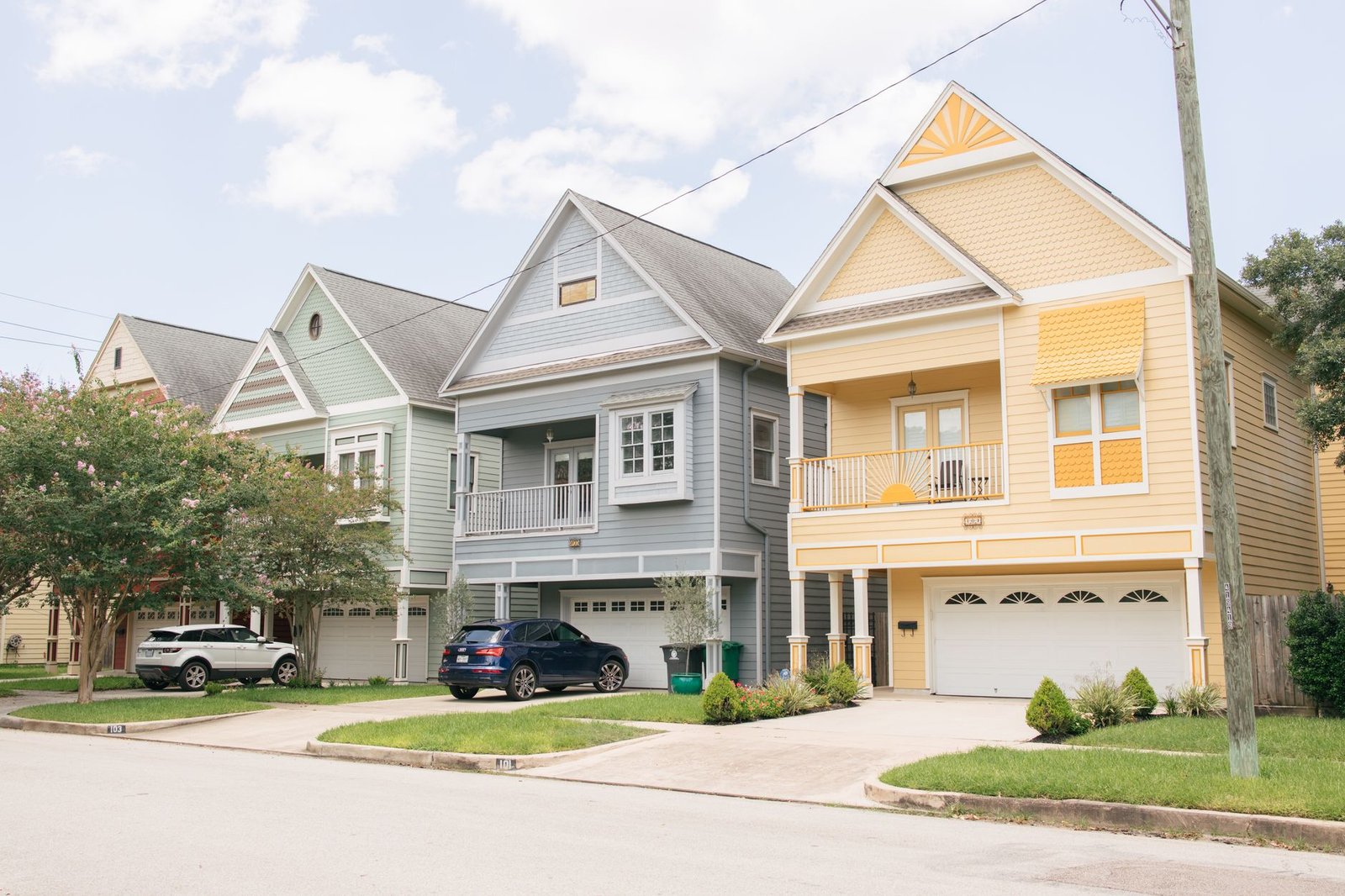
Search for this figure and you will find numbers ranging from roughly $2,400 to nearly $3,000. They are not contradicting one another so much as measuring different things.
Each source assumes a dwelling coverage amount, a deductible, a liability limit and a borrower profile, then averages quotes against it. Change the assumed dwelling limit from $300,000 to $400,000, or the deductible from $1,000 to $2,500, and the average moves by hundreds of dollars.
The same applies to state figures. You will see Florida quoted anywhere from roughly $8,500 to well over $9,000 depending on the assumptions behind the study. Treat the ranking as reliable and the precise numbers as approximate.
The most and least expensive states

| Most expensive | Average annual | Least expensive | Average annual |
|---|---|---|---|
| Florida | ~$8,471 | Vermont | ~$1,170 |
| Nebraska | ~$5,513 | Hawaii | among the lowest |
| Colorado | high | Delaware | among the lowest |
| Oklahoma | high | ||
| Kansas | high |
Two things in that table are worth pausing on.
Nebraska is second. Not a coastal state, no hurricanes — but squarely in the hail corridor, where a single storm season can produce enormous volumes of roof claims. Colorado, Oklahoma and Kansas are there for the same reason. Hail, not hurricanes, is what makes the middle of the country expensive.
Hawaii is cheap. This surprises people, and it reflects how U.S. property policies are structured: hurricane and earthquake exposure in Hawaii is largely written separately rather than inside the base homeowners policy, so the headline premium looks low while the real cost of full protection is higher.
What happened to rates in 2026
The increases have been sharp and unevenly distributed. Among the largest state-level rises recorded for 2026:
- Louisiana — around 58 percent
- Michigan — around 48 percent
- Virginia — around 37 percent
- Kentucky — around 33 percent
- Minnesota — around 29 percent
Nebraska recorded the largest dollar increase among the most expensive states, with average premiums rising around $960 — a 21 percent jump. Analysis of the first half of 2026 found individual counties where rates spiked by up to a third.
Florida, notably, appears to be stabilising after several years of severe increases, which illustrates that these movements are cyclical and driven by local conditions rather than a single national trend.
Why premiums have risen
Four forces, and most rising states have several at once.
Rebuilding costs. Insurance pays to rebuild, not to buy. Construction materials and skilled labour have both risen faster than general inflation, so the cost of every claim rose even where claim frequency did not.
Catastrophe frequency and severity. More frequent severe convective storms, wildfire, hurricane and flood events have driven claim volumes up across large regions at once.
Reinsurance. Insurers buy their own insurance against catastrophic losses, and reinsurance prices have risen substantially. That cost passes through to every policyholder in an exposed region, whether or not they personally claimed.
Litigation. In some states, claims are litigated more frequently and settle higher, which raises the cost of every policy written there. Several states have passed reforms aimed at this, and Florida’s recent stabilisation is partly attributed to them.
What drives your specific premium
Within your state, the following do most of the work. The underlying mechanism is the same chain of filed multipliers described in our explanation of how car insurance rates are calculated.
- Location, to the ZIP code. Local claim experience, distance to a fire station and hydrant, crime rates, and catastrophe exposure.
- Dwelling coverage amount — the rebuild cost, which is the single largest input.
- Age and construction of the home. Older electrical, plumbing and heating systems raise risk; masonry generally rates better than frame in wind-exposed areas.
- Roof age and material. The factor that has changed most in recent years.
- Claims history — yours and the property’s, tracked in the C.L.U.E. database for several years.
- Credit-based insurance score, where state law permits it.
- Coverage choices — replacement cost versus actual cash value, liability limits, endorsements.
- Deductible, including any separate wind, hail or hurricane deductible.
- Attractive nuisances — pools, trampolines — and certain dog breeds.
The roof changed everything
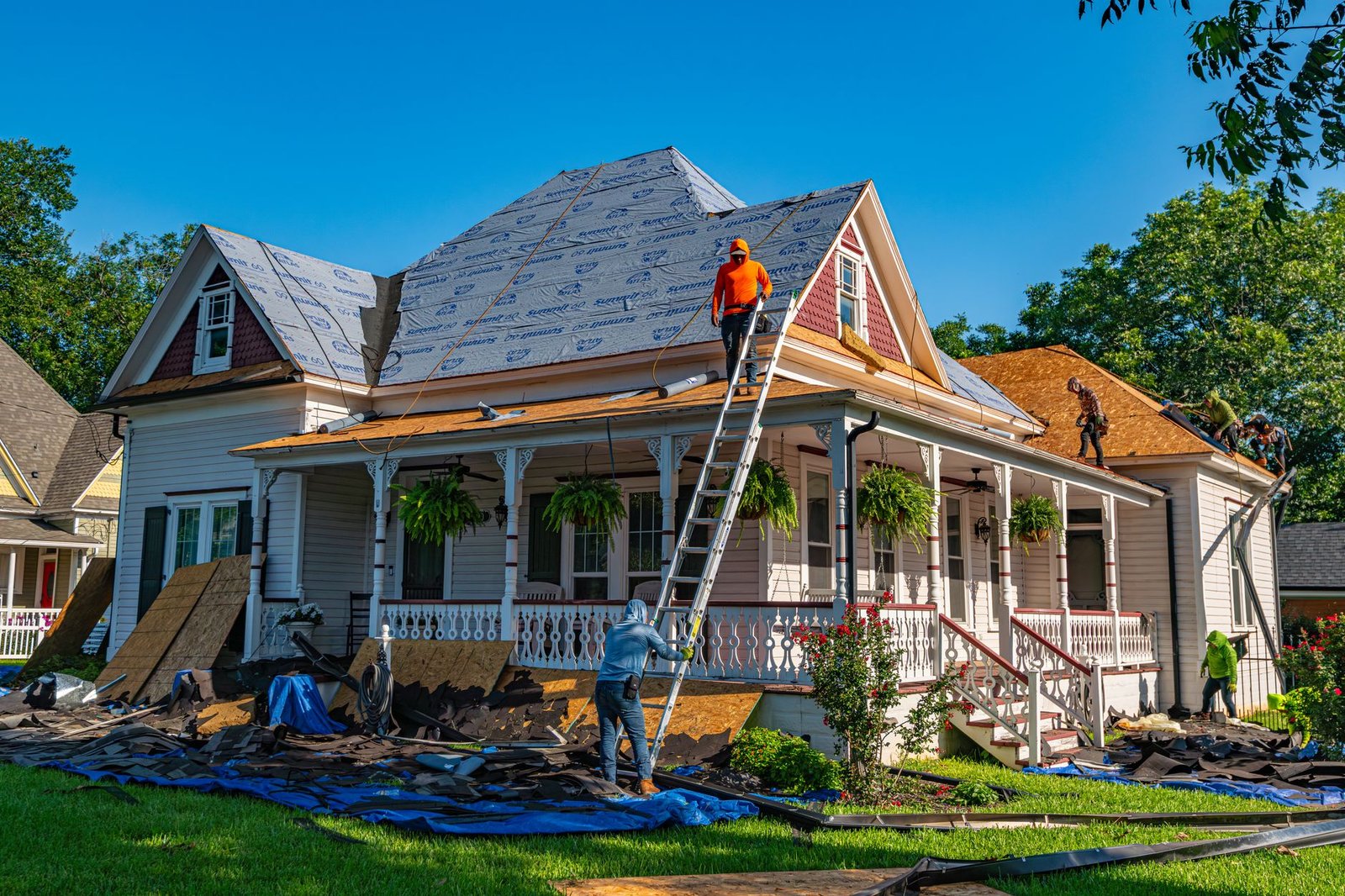
If your premium jumped and nothing about your life changed, the roof is the most likely explanation.
Roof claims are the most common large claim in much of the country, and insurers have responded in three ways. Many now apply a roof surfacing schedule, paying older roofs on an actual cash value basis regardless of how the rest of the policy is written — so a twenty-year-old roof destroyed by hail is paid at a fraction of replacement cost. Some decline to write or renew policies on roofs beyond a certain age entirely. And nearly all price roof age heavily.
Replacing an ageing roof frequently reduces the premium enough to matter, and impact-resistant shingles earn a discount in hail-prone states — in several of them insurers are required to offer one.
The deductible that is not your deductible
Your declarations page shows a deductible — say $1,000. In much of the country it does not apply to the claims most likely to happen.
Hurricane and named-storm deductibles are separate and usually expressed as a percentage of the dwelling limit. Two percent on a $400,000 dwelling limit is $8,000, not $1,000. Wind and hail deductibles work identically across much of the Midwest and Plains.
These percentage deductibles are one of the main reasons an apparently affordable policy can leave a household badly exposed, and they are the first thing to check on any quote you are comparing. The full anatomy of a policy is in our guide to what home insurance covers and what it does not.
What the same house costs in three states
Applying the state averages to one property makes the scale of the geography effect concrete. Take a hypothetical 2,200 square foot home with $400,000 of dwelling coverage and a $1,000 deductible, owned by a buyer with a clean claims history.
| State | Illustrative annual premium | Monthly effect on the mortgage payment |
|---|---|---|
| Florida | ~$8,471 | +$706 |
| Nebraska | ~$5,513 | +$459 |
| National average | ~$2,872 | +$239 |
| Vermont | ~$1,170 | +$98 |
The third column is the one buyers underestimate. Because insurance is escrowed, a Florida premium adds more than $600 a month to the mortgage payment relative to Vermont — on the same house, with the same loan, at the same interest rate.
Put differently: the insurance difference between those two states exceeds what a full percentage point of mortgage rate would cost on a $400,000 loan. Buyers shop rates obsessively and frequently never price the insurance until after the offer is accepted — which is why our guide to first-time home buyer loan options recommends quoting coverage before you commit to a property rather than after.
It also affects how much house you qualify for. Lenders calculate debt-to-income using the full monthly payment including escrow, so a high-premium state directly reduces your borrowing capacity — a connection explored in our guide to what affects mortgage rates.
When insurers simply leave
In parts of the country the problem is no longer price but availability. Carriers have stopped writing new business or declined to renew existing policies in areas facing concentrated wildfire or hurricane risk.
Where the private market withdraws, states operate insurers of last resort — California’s FAIR Plan, Florida’s Citizens Property Insurance, and wind pools along the Gulf and Atlantic coasts. These provide coverage that is typically narrower and more expensive than a standard policy, frequently excluding liability and requiring a separate policy to fill the gaps. They are a backstop, not a preference.
If you receive a non-renewal notice, start shopping immediately. A lapse on a mortgaged property allows the lender to force-place coverage, which is far more expensive and protects only their interest.
How to lower it
- Shop the whole market annually. Carrier dispersion is usually larger than any discount, and loyalty is not rewarded.
- Bundle home and auto. Typically the largest single discount available in either line.
- Raise the deductible to a level you could genuinely absorb.
- Fix the roof if it is ageing, and ask about impact-resistant materials.
- Add protective devices — monitored alarms, water leak detection, automatic shut-off valves. Water damage is the most frequent claim type, and insurers increasingly discount devices that prevent it.
- Ask for every discount by name — claims-free, new home, new roof, non-smoker, retiree, gated community, professional association.
- Check your dwelling limit is right rather than inflated. Over-insuring the structure costs money; under-insuring it costs more at claim time.
- Improve credit where your state permits its use.
- Stop filing small claims. A claim slightly above the deductible can cost more in future premium than it pays.
Several states also run mitigation grant programmes — Alabama, Florida and others have funded roof strengthening and wind-resistance retrofits. Your state department of insurance publishes what is available locally, along with consumer rate comparison guides that almost nobody reads.
Why you may not notice the increase

Most homeowners with a mortgage pay insurance through escrow, bundled into the monthly payment alongside property taxes. The insurer bills the servicer, the servicer pays it, and the homeowner sees only a revised monthly figure months later.
The consequence is that a large premium increase surfaces as an escrow shortage notice and a higher mortgage payment, frequently with a lump-sum catch-up amount attached. By then the renewal has already happened.
The fix is simple: read the renewal declarations page when it arrives, rather than the escrow analysis when it does. You can change insurers mid-term and have the refund applied to escrow.
If your premium just jumped
- Ask the insurer why in writing. A statewide rate revision affects everyone; a change specific to you may be a claim, a roof age threshold, or a credit-based score change.
- Check the dwelling limit has not been automatically inflated beyond what it would cost to rebuild.
- Re-quote at least four carriers, including a regional insurer your comparison site did not show.
- Ask about an independent agent, who can access carriers that do not sell direct.
- Check your state’s rate filings. Approved increases are public, and your department of insurance can tell you whether the increase was authorised.
The costs the premium does not include
Budgeting for home insurance means budgeting for more than the policy, because the standard policy leaves several gaps that most homeowners close separately.
- Flood insurance, excluded from every standard policy and bought separately through the NFIP or a private insurer. In a high-risk zone your lender will require it; outside one it is optional and frequently inexpensive. See our guide to how flood insurance works.
- Earthquake coverage, also excluded everywhere and sold as an endorsement or standalone policy, usually with a percentage deductible.
- Sewer and drain backup, excluded as standard and among the cheapest endorsements you can add.
- Scheduled personal property for jewellery, firearms, collectibles and cameras, all of which carry sub-limits well below their value.
- Extended replacement cost and ordinance or law coverage, which protect against rebuild costs exceeding your limit and against building code upgrades an older home would require.
- An umbrella policy, which extends liability beyond the homeowners limit for a modest premium — covered in our guide to umbrella insurance.
Adding all of them can increase total spend meaningfully above the headline premium. Leaving them out is how a household ends up technically insured and practically exposed — and the gaps only become visible at claim time.
When comparing quotes, make sure every carrier is pricing the same set of endorsements. A cheaper policy that omits sewer backup, carries actual cash value on contents and has no ordinance coverage is not cheaper; it is smaller.
Frequently asked questions
Is home insurance required?
Not by law in any state, but effectively yes if you have a mortgage — every lender requires it, and will force-place far more expensive coverage if you let it lapse. Owning outright, it is optional and still strongly advisable.
Should I insure for market value or rebuild cost?
Rebuild cost, always. Market value includes land, which cannot burn. A home may sell for $600,000 while costing $350,000 to rebuild — or the reverse in a low-cost market, where rebuild cost exceeds sale price.
How often should I shop?
Annually, and always after a non-renewal notice, a significant increase, a renovation, or paying off the mortgage. Quoting costs nothing and does not affect your credit, since insurers use a soft inquiry.
Does a claim always raise my rate?
Not always. Weather-related claims are often treated more leniently than liability or water damage claims, and some carriers offer claims forgiveness. But claims are recorded in the C.L.U.E. database for several years and affect eligibility at other insurers too, so the effect outlasts the current policy.
Why is my neighbour paying less?
Different insurer, different roof age, different claims history, different coverage limits and deductibles, and in most states a different credit-based insurance score. Identical houses routinely carry very different premiums, which is precisely why shopping works.
The short version
The national average is around $2,872, and your state matters more than anything you control — Florida runs above $8,000 while Vermont sits near $1,170. Within your state, the roof, the deductible structure and the carrier you happen to be with do most of the rest.
Read the renewal declarations page rather than waiting for the escrow notice, check whether a percentage wind deductible applies, and re-quote four carriers every year. In a market moving this fast, the premium you were quoted two years ago tells you very little about what you should be paying now.
This article is general information for U.S. consumers and is not insurance advice. Premiums, rate changes and market availability vary by state, insurer and property and move quickly; figures cited reflect published 2026 industry data and are averages rather than quotes. Confirm current pricing with licensed agents and your state department of insurance.